
The Living Ascent of Puerto Lumbreras’ Highest Crest
At 1,247 metres, Cabezo de la Jara forms the geographic ceiling and environmental crown of southwestern Murcia. The mountain rises above Puerto Lumbreras as more than a viewpoint. Its slopes create a living sequence in which soil, temperature, exposure and rainfall change gradually with elevation. A walk upward can therefore become a compact field lesson in Mediterranean ecology, beginning among sun-baked limestone and esparto grass before reaching the cooler shelter of Aleppo pine woodland.
The ascent crosses habitats that are easily overlooked when viewed from a distance. Semi-arid ramblas and open steppe support plants adapted to drought, while higher contours hold aromatic shrublands and pockets of woodland that moderate heat and retain organic matter. Before choosing a trailhead, it is useful to learn about Puerto Lumbreras, its historic position between the Levante and Andalusia, and the landscape that has long connected the town with Cabezo de la Jara. The mountain is best approached as an educational field journey, one that celebrates both fragile dryland habitats and the fragrant canopy above them.
Lowland Steppes and Resilient Esparto Communities
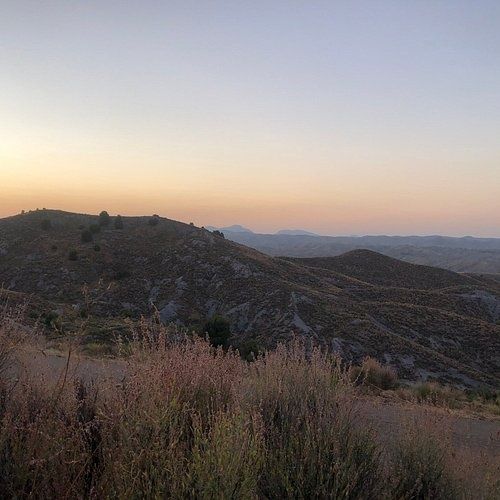
The lower slopes present the most immediately recognisable face of southeastern Spain. Pale limestone, loose stones and thin soils absorb the sun, while rainfall arrives irregularly and may be separated by long dry periods. In this demanding setting, esparto grass, Stipa tenacissima, forms tough, spreading clumps. Its narrow leaves reduce water loss, and its deep, fibrous root system helps it remain anchored where sudden runoff could otherwise strip the soil away. Wild thyme and other low aromatic plants occupy gaps between the grasses, releasing scent most strongly when warmed by the afternoon sun.
These plants are not simply decorative features of an arid landscape. Their roots bind fragile ground, their stems slow the movement of rainwater and their litter gradually adds organic material to poor soils. Low scrub also creates shade at ground level, giving insects, spiders, lizards and small mammals places to shelter from extreme temperatures. The wider Puerto Lumbreras area combines natural routes with a long history of water management and settlement, and the contrast between engineered water systems and naturally water-conserving vegetation helps explain how people and wildlife have adapted to the same dry climate.
Look closely rather than expecting a dense green carpet. The most successful lowland plants often keep a modest profile and invest in protection. Waxy surfaces, small leaves, aromatic oils and seasonal growth allow Mediterranean species to make use of brief periods of moisture while limiting stress during summer. The open structure of the steppe also supports birds of prey searching for movement across the ground, as well as reptiles and ground fauna that depend on sunny, sparsely vegetated patches.
- Esparto grass: Its dense roots stabilise soil and its tough leaves withstand heat and grazing pressure.
- Wild thyme and other aromatics: Oils and compact foliage reduce water loss while attracting pollinating insects when flowers appear.
- Low scrub: It provides cover for reptiles, invertebrates and small mammals while reducing erosion on exposed slopes.
The Mid-Elevation Shift toward Aromatic Shrublands
As the trail gains height, the change may first be felt rather than seen. Temperatures become slightly less severe, shaded hollows hold moisture for longer and the vegetation begins to close around the path. Rosemary, rockrose, or Cistus, and lentisk become more prominent, forming a denser Mediterranean maquis. Their presence indicates that the slope is offering enough shelter and soil depth for taller, longer-lived shrubs, even though drought remains a defining ecological force.
Exposure continues to shape the view. A south-facing slope can remain open, bright and wind-pruned, while a protected aspect may support taller shrubs and a more continuous understory. This pattern has parallels in the coastal landscapes of Calblanque, Monte de las Cenizas y Peña del Águila, where slope orientation, wind, fire history and differences in rainfall influence the density and composition of scrub and pine communities. The comparison is useful, but Cabezo de la Jara should still be read on its own terms, as a high inland mountain within Puerto Lumbreras.
| Elevation character | Typical indicators | What to notice |
|---|---|---|
| Lower steppe | Esparto, thyme and open scrub | Thin soils, strong sunlight and erosion-sensitive ground |
| Intermediate maquis | Rosemary, rockrose and lentisk | More continuous cover, stronger fragrance and cooler hollows |
| Upper woodland | Aleppo pine and forest-floor plants | Filtered light, cooler air and greater shelter for wildlife |
The mid-elevation belt is especially valuable for pollinators and small birds because it combines flowering shrubs with protective structure. In spring, blooming plants can provide concentrated food for insects, while berries and seeds later support birds and mammals. Dense maquis also reduces the force of rainfall on bare ground. For hikers, this is the point at which staying on the established route becomes particularly important: stepping around a shrub may damage a plant whose roots are holding a shallow slope together.
Entering the Summit Aleppo Pine Woodlands
Near the crest, Aleppo pines, Pinus halepensis, alter the experience of the ascent. Their crowns filter the intense light, their trunks create vertical structure and their needles contribute a distinctive scent to the air. The woodland offers a cooler microclimate than the open slopes, although it should not be mistaken for a permanently damp forest. Water remains limited, and the health of the canopy depends on careful adaptation to Mediterranean summers, wind and periodic drought.
The pine belt acts as a refuge for wildlife. Songbirds can use branches and foliage for nesting or cover, while mammals move through the understory in search of food and shelter. Across comparable Murcian pine landscapes, woodland and maquis support rabbits, foxes, dormice and a broad range of birds, while dense shrub cover also benefits reptiles and hunting raptors. At Cabezo de la Jara, quiet observation is more rewarding than pursuit. A pause beneath the trees may reveal calls, tracks, feathers or movement that would be missed during a hurried climb.
Human access has been thoughtfully integrated into the mountain landscape through the Cabezo de la Jara Astronomical Observatory and its surrounding trail network. Rather than standing on the 1,247-metre summit crest itself, the observatory, the youth hostel and the educational facilities are situated at a mid-elevation nature and recreation hub at approximately 800 metres above sea level. This setting, preserved within a designated Site of Community Importance, benefits from exceptionally low light pollution and panoramic skies. Nearby, the easy, signposted Sendero Astronómico covers 1.8 kilometres out and back around the 800-metre contour, using ten planetary markers to represent the Solar System at a scale of 1:3,000,000,000. Two sundials and a lunar clock add an interpretive dimension to the route, which begins beside the observatory and circles behind the hostel before returning toward the parking area, offering visitors a detailed orientation before they continue toward the higher pine ridges.
- Allow the woodland to remain a quiet refuge by keeping voices low and avoiding playback of bird calls.
- Use the marked astronomical and walking routes rather than creating shortcuts through the pine understory.
- Check official observatory information before visiting, since opening dates, seasonal programmes and reservations vary.
- Remember that the dark sky is part of the site”s natural value, so limit unnecessary artificial light after sunset.
Field Etiquette for Respectful High-Altitude Exploration
A successful ascent begins with realistic planning. Spring and autumn are generally more comfortable for walking, while summer conditions can be demanding even at higher elevation. Winter may provide crisp visibility and opportunities to combine a daytime walk with an observatory visit, but weather can change quickly. Trail runners and hikers should consult current local conditions, allow extra time for exposed sections and avoid treating the mountain”s modest height as a guarantee of easy terrain.
Responsible access protects both the route and the habitats beside it. Concentrated foot traffic can widen paths, expose roots and accelerate erosion, especially after heavy rain when soils are vulnerable. Nesting birds and other wildlife also need distance, particularly during spring and early summer. A considerate visitor leaves plants, stones and natural materials in place, carries all waste away and avoids lighting fires or disturbing the silence that makes the summit valuable by day and night.
- Check conditions: Review the forecast, route information, observatory notices and any local restrictions before departure.
- Prepare water and protection: Carry sufficient drinking water, sun protection, suitable footwear and an extra layer for the cooler summit.
- Choose a sustainable pace: Walk steadily, pause in durable areas and avoid cutting switchbacks or widening the trail.
- Observe without disturbing: Keep away from nests and den sites, do not feed wildlife and use binoculars instead of approaching animals.
- Leave no trace: Take rubbish home, keep dogs controlled where appropriate and leave flowers, branches, rocks and cultural features undisturbed.
- Finish responsibly: Before leaving, check the ground for small items, extinguish no fires because fires should not be made, and preserve darkness around astronomical facilities.
Preserve the Subtle Heights of Cabezo de la Jara
The ascent of Cabezo de la Jara reveals its character gradually. Esparto communities hold together the dry lower slopes, aromatic shrubs mark the transition into a more sheltered Mediterranean belt, and Aleppo pines create a peaceful upper refuge where wildlife and visitors share a cooler environment. None of these zones exists in isolation. The health of the woodland depends partly on stable soils below, while the open habitats support species that would disappear if every slope became densely forested.
That layered relationship gives every visitor a practical responsibility. Stay on established routes, plan around heat and weather, respect nesting wildlife and protect the darkness that makes the observatory surroundings special. With these simple habits, hikers, residents and naturalists can help maintain the mountain”s biodiversity and pass on an intact landscape beneath the star-filled skies of Puerto Lumbreras.